
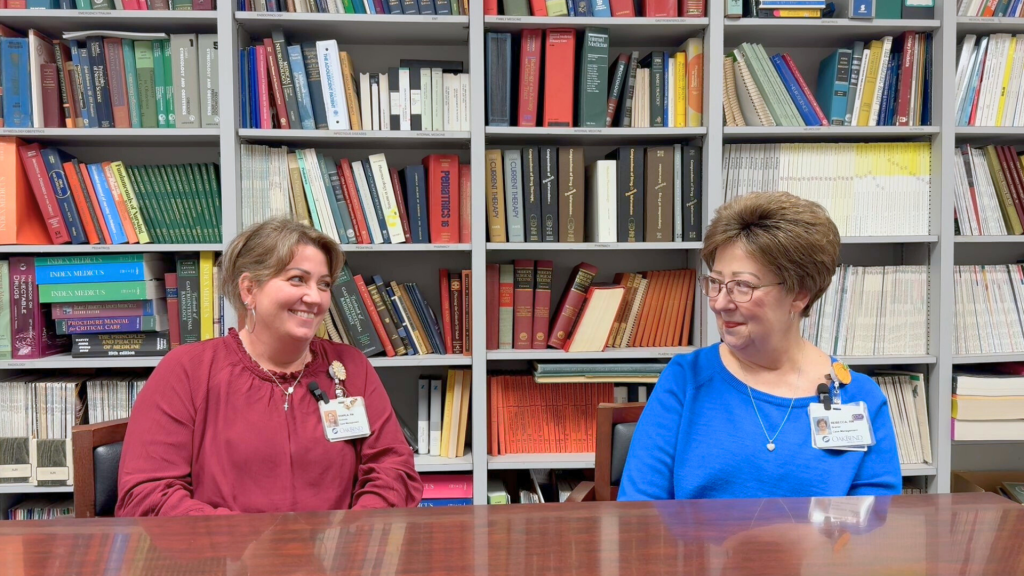
As we celebrate Giving Tuesday, we’re sharing the work of our case managers and the care they provide behind the scenes. Your support today strengthens this important work.
2025 GivingTuesday: Celebrating the Quiet Work Case Management Does
When most people think about a hospital stay they picture doctors, nurses, and medical equipment. What they usually do not picture are the case managers, even though they are the ones who help patients and families make sense of everything that happens outside the exam room. They guide, explain, comfort, and coordinate. They handle the things people do not always see but always feel.
At OakBend, case management isn’t a formality. It is a relationship. Every patient is checked on. Every family is offered support. And the team stays involved until the patient is safely on the other side of their recovery journey. This level of teamwork is possible because of Sheree Oehlke. She oversees our entire case management department and has been a part of OakBend for more than 30 years!
Sharla Svoboda and Rebecca Bramer are two of the many case managers who make up that team. Sharla has more than 25 years of nursing experience and five years as an ICU case manager at OakBend. Rebecca has spent 35 years as an RN and 15 years in case management, 10 of them here at OakBend.
One patient’s story, which both Sharla and Rebecca were part of, shows how deeply case management can shape someone’s journey through the hospital.
A Patient’s Journey Through the ICU and Beyond
The patient arrived in the ICU paraplegic, septic, and battling multiple wounds. The ICU team started IV antibiotics right away and began the long process of wound care. As they learned more about his situation, the picture grew heavier. He had been injured in a road rage shooting. He was homeless. And he had very little family support.
Once stabilized, he moved to the Med-Surg unit, where Rebecca picked up his care. His recovery would not be quick. He needed repeated debridements, a wound vac, and continued IV antibiotics. Physical therapy began working with him too. And while the medical team focused on healing his body, case management stepped in to handle everything else that would determine his future.
Discharge planning for him was tough. He had nowhere safe to go, and insurance could not cover all the services he needed. These are the kinds of moments that could derail a patient’s recovery somewhere else. But OakBend’s team does not walk away from someone just because the process gets complicated.
“At OakBend we treat folks no matter if they have the ability to pay or not” noted Rebecca.
The team ultimately arranged for him to transition to OakBend’s skilled nursing unit so he could continue his IV antibiotics, wound care, and therapy. When he is ready, he will move to a supported living environment that fits his long-term needs.
All of this took hours of coordination and quiet, behind-the-scenes work.
“There’s a lot that goes on behind the scenes in case management,” Rebecca said.
Insurance approvals and denials. Searching for alternative plans. Calls with family. Calls with therapists. Calls with the next level of care. Sharla added that family support is its own major part of the job.
“Family support is a big one for case management as well” stated Sharla.
People dealing with crisis often don’t know what to ask for or what they need. Case management fills those gaps with compassion and clarity.
“People don’t realize until they are in difficult situations that emotional support and guidance means just as much as treating their physical illness. Then there are some things that people don’t even think about as their mind is so consumed by what is going on with their loved ones. Something as common as religious services are something that case management will reach out to help make happen and support the patient and their family in any way they can” described Sharla.
Some days involve guiding patients toward recovery. Other days involve being fully present with a family at the end of life.
“That is a very special time,” Rebecca says. “It’s a privilege to share that with a family and a patient.”
What Case Managers Actually Do
For people who have never needed one, or never encountered one when they wish they had, the role can feel blurry. Case managers at OakBend describe it simply: they stay with patients and families from the start to the finish.
Here is some of what that looks like:
- Assess every patient who comes through the door, even if they may not need more than a quick check-in.
• Begin discharge planning early so families are not scrambling at the last minute.
• Arrange equipment before a patient leaves, from walkers to oxygen to home health needs.
• Set up medications, including antibiotics given at home.
• Coordinate transportation when someone has no way to get to or from treatment.
• Work with home health providers to make sure the patient has what they need after they leave.
• Find the right level of post-hospital care, whether rehab, skilled nursing, or a supported living setting.
• Help families navigate insurance, appeals, and denials, and come up with a backup plan when needed.
• Offer emotional support and guidance when families feel overwhelmed or scared.
• Follow up after discharge to make sure the person is safe and supported.
Case managers often meet people on the worst days of their lives. They stay long enough to help them reach the better ones.
What Makes OakBend Stand Out
At some hospitals, patients can go through an entire stay without ever meeting a case manager. At OakBend, that would be unthinkable. The team checks on every patient, even if all they need is a brief conversation and a quick assessment. That steady presence is part of the culture here, not an extra step.
People feel it. Some patients tell the team they do not want to go home because they feel safer here.
“We are so involved with our patients that we have been told they don’t want to go home. They feel safe here and they are scared to go home and be by themselves. They would rather stay here in the hospital than discharge home.”
That kind of trust does not appear on its own. It grows from case managers who look beyond the chart and focus on the whole person: the illness, the family dynamic, the financial strain, the living situation, the fear, and the hope.
Case management at OakBend is not about checking boxes. It is about people walking beside people until the crisis passes. Sharla and Rebecca are only two voices from the team, but their stories reflect the same heart you see throughout the department. They have built a culture where no one falls through the cracks and no one has to face the hardest moments alone.