Stroke Awareness Month: The Signs You Should Never Ignore
Stroke Awareness Month: The Signs You Should Never Ignore
This information is meant to help guide healthcare decisions. If you are experiencing life-threatening symptoms, seek emergency medical care immediately.
Most people don’t think about stroke until it happens to someone they love.
That’s part of why Stroke Awareness Month matters. Stroke symptoms can happen suddenly, often without warning, and knowing what to look for can make the difference between recovery and permanent disability.
In a recent “Cup of Joe” conversation, OakBend Medical Center’s Stroke Program Coordinator and Quality Director, BJ Patel, joined Joe Freudenberger to discuss the warning signs of stroke, the importance of fast emergency care, and why awareness can save lives.
Throughout the discussion, one theme kept coming up: every minute matters during a stroke.
What Is a Stroke?
A stroke happens when part of the brain suddenly stops getting the blood and oxygen it needs to function. This can occur when a blood vessel becomes blocked or when a vessel ruptures and bleeds into the brain.
As BJ Patel explained:
“A stroke is interrupted blood flow to the brain, or oxygen is not being provided to that area.”
When that interruption happens, brain cells begin to die within minutes. That’s why stroke is considered a medical emergency and remains one of the leading causes of long-term disability in the United States.
According to the American Stroke Association, someone in the United States experiences a stroke every forty seconds, underscoring how important awareness and fast treatment truly are.
The Stroke Warning Signs Everyone Should Know
One of the most important parts of Stroke Awareness Month is helping people recognize stroke symptoms quickly enough to get emergency care.
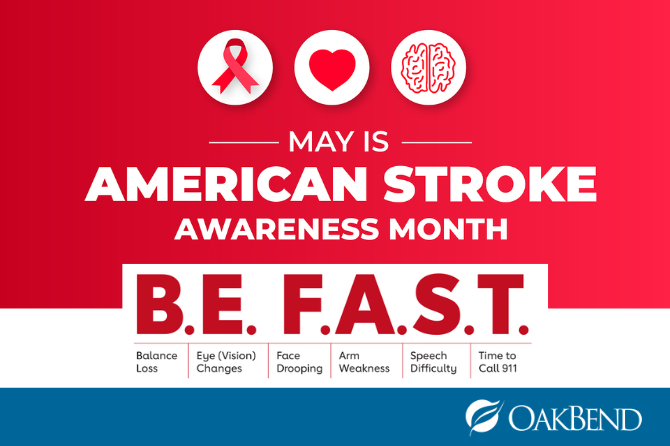
During the conversation, BJ Patel shared the acronym BEFAST, a simple way to remember the most common warning signs of stroke:
B — Balance
Sudden dizziness, loss of balance, or trouble walking.
E — Eyes
Blurred vision or unexpected changes in vision.
F — Face
Facial drooping or an uneven smile.
A — Arms
Weakness or numbness in the arm or leg.
S — Speech
Slurred speech, confusion, or trouble speaking clearly.
T — Time
Time to call 911 immediately.
One especially important point from the discussion was that the person having a stroke may not recognize the symptoms themselves. In many cases, it’s a family member, friend, or bystander who notices something is wrong first.
That’s why BJ Patel emphasized:
“Family and friends need to know the BEFAST signs and recognize the symptoms immediately and call 911.”
The National Institute of Neurological Disorders and Stroke offers additional information about stroke symptoms, emergency response, and treatment.
Why You Should Never “Wait It Out”
Some health concerns can wait a day or two. Stroke symptoms are not one of them.
During the conversation, Joe Freudenberger stressed how important it is to seek help immediately:
“This is one of those conditions that you don’t want to wait on.”
That urgency comes down to what’s happening inside the brain during a stroke. When blood flow is interrupted, brain cells begin dying within minutes, increasing the risk of permanent disability the longer treatment is delayed.
As BJ Patel explained:
“The neurons die, and the patient will get a disability.”
That’s why stroke teams often use the phrase: ‘Time is brain.’
The faster a patient reaches the emergency room, the greater the chance of reducing brain damage, improving recovery, and potentially saving their life.
How Fast Stroke Treatment Can Change Lives
For some strokes caused by blood clots, doctors may use a clot-busting medication called tPA to help restore blood flow to the brain. But there’s only a short window of time to safely administer it, which is why immediate emergency care is so important.
During the conversation, BJ Patel shared the story of a patient who arrived at OakBend’s Jackson Street campus confused and disoriented, with only a small window left for treatment.
After imaging confirmed the stroke, the team moved quickly to begin treatment and administer tPA.
As Joe Freudenberger explained:
“Getting that clot-busting drug on board as quickly as possible is essential.”
For Patel, the experience became a powerful reminder of how fast action during a stroke can completely change a patient’s outcome. She described watching the patient improve after treatment and seeing firsthand how rapid intervention helped prevent long-term disability.
Stories like that are exactly why stroke awareness matters. Recognizing symptoms early and seeking emergency care immediately can make a life-changing difference for patients and their families.
The Mayo Clinic provides additional information about stroke treatment timelines, emergency care, and recovery.
Why Stroke Centers Matter
Not all hospitals are equipped to manage strokes the same way. Certified Primary Stroke Centers follow specialized protocols designed to recognize, diagnose, and treat strokes as quickly as possible because faster treatment can lead to better outcomes.
During the conversation, BJ Patel explained that OakBend Medical Center is a certified Primary Stroke Center and has built its stroke program around evidence based care, standardized protocols, and rapid response coordination.
Stroke care also depends on a highly coordinated team. From emergency physicians and specially trained nurses to neurologists and imaging staff, every part of the process is designed to move quickly when a patient arrives with stroke symptoms.
As Joe Freudenberger explained:
“The whole process, the physicians, the staff, the protocols, they’re all geared around achieving your best possible outcome.”
The takeaway is simple: if stroke symptoms appear, seek emergency care immediately. Getting to the closest emergency room, especially a Primary Stroke Center when available, can make a critical difference in treatment and recovery.
Who Is Most at Risk for Stroke?
Stroke can happen to anyone, but certain health conditions and lifestyle habits can significantly increase the risk over time.
Some of the most common stroke risk factors include:
- High blood pressure
- High cholesterol
- Diabetes
- Obesity
- Smoking
- Excessive alcohol use
- Heart disease
- Atrial fibrillation (AFib)
During the conversation, BJ Patel emphasized that stroke risk looks different for every patient and that prevention often starts with understanding your personal health history.
Many of these risk factors can be managed through preventive care, regular screenings, medication management, and healthy lifestyle changes. Conditions like high blood pressure and diabetes are especially important to control because they can quietly damage blood vessels over time.
BJ Patel also stressed the importance of managing chronic conditions early, particularly for patients living with diabetes or heart disease.
The American Heart Association offers additional guidance on stroke prevention, blood pressure control, smoking cessation, cholesterol management, and heart health.
What Stroke Recovery Looks Like
Recovery from a stroke often begins almost immediately after emergency treatment. In many cases, rehabilitation starts within the first twenty-four hours to help patients regain strength, mobility, communication, and independence as early as possible.
During the conversation, BJ Patel described stroke recovery in three important phases: strength, independence, and confidence.
Physical therapy focuses on rebuilding strength, balance, and mobility after a stroke. Occupational therapy helps patients regain independence with daily activities like dressing, bathing, eating, and returning to normal routines. Speech therapy may also play an important role for patients recovering from communication or swallowing difficulties.
BJ Patel emphasized that early rehabilitation can make a major difference in long-term recovery and patient outcomes.
At OakBend Medical Center, stroke rehabilitation is designed to continue beyond the emergency room and hospital stay. Patients may begin working with physical therapy, occupational therapy, and speech therapy teams while still in the hospital before transitioning into additional rehabilitation services based on their recovery needs.
OakBend also offers the only hospital-adjacent Skilled Nursing Facility in Fort Bend County, providing patients with continued medical care, rehabilitation support, and nursing supervision during recovery. The facility helps patients continue building strength and independence while remaining connected to hospital based resources and care teams.
Patients who need additional rehabilitation after hospitalization may benefit from skilled nursing care, inpatient therapy services, or outpatient rehabilitation programs as they continue recovering from stroke.
For more information about OakBend’s Skilled Nursing Facility, visit OakBend Skilled Nursing Facility.
For additional stroke rehabilitation resources and caregiver support, the American Stroke Association Recovery Resources offers educational tools for stroke survivors and families.
The Bottom Line
Stroke Awareness Month is about more than awareness. It’s about recognizing the signs of stroke early, acting quickly, and understanding that fast treatment can save a life or prevent long term disability.
Knowing the BEFAST warning signs can make all the difference:
- Balance problems
- Eyes and sudden vision changes
- Face drooping
- Arms with weakness or numbness
- Speech difficulties
- Time to call 911 immediately
As BJ Patel and Joe Freudenberger emphasized throughout the conversation, stroke treatment is a race against time. The sooner a patient receives emergency care, the better the chances for recovery and reduced disability. Because when it comes to stroke, acting fast can change everything.